

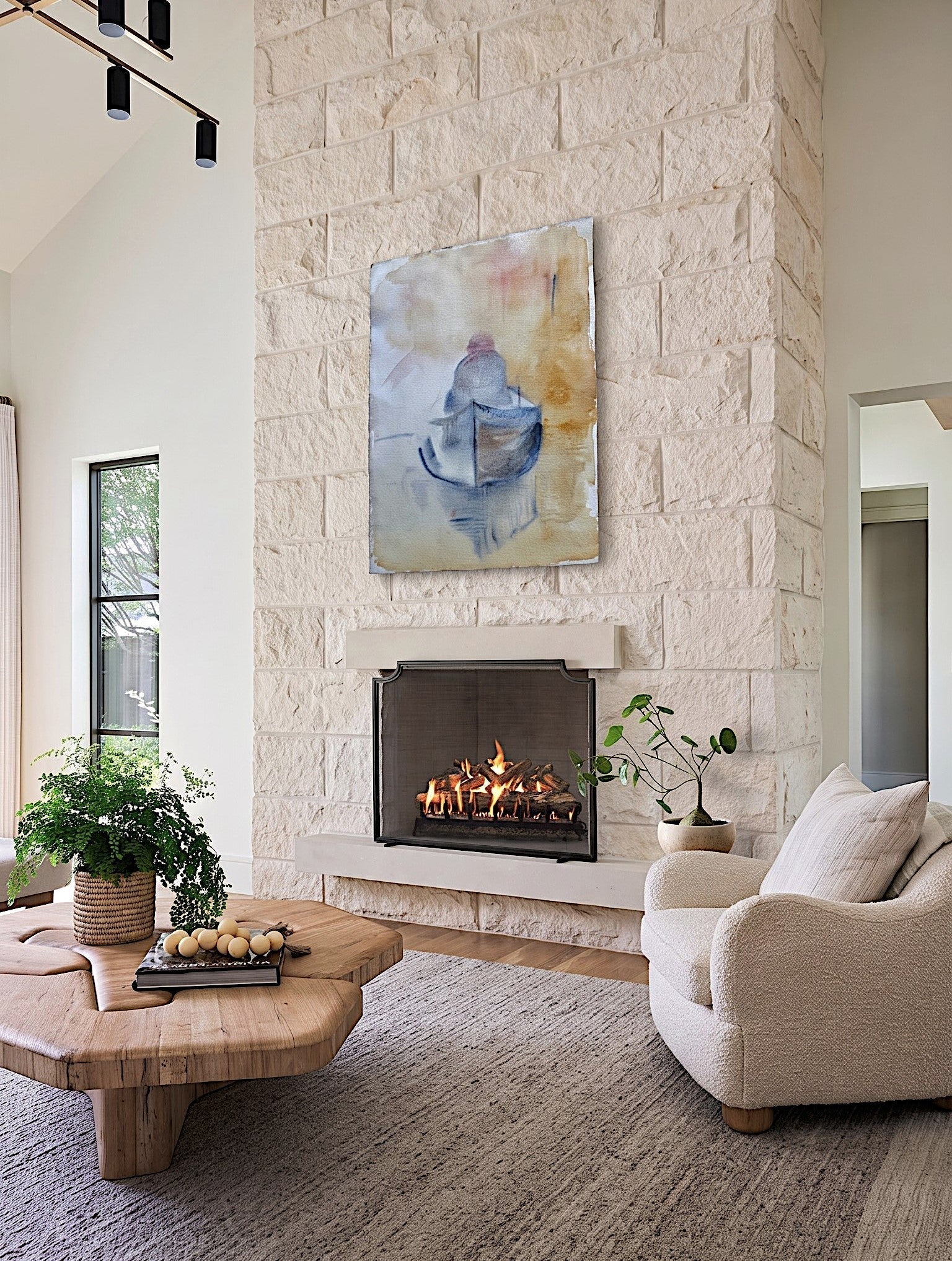
A fireplace screen is one of the last pieces specified for a room, but it changes how the fireplace reads every day after. The right screen gives the firebox proportion, material, and finish while answering the architecture around it.

In the Dallas studio, that work starts with structure. Each custom fireplace screen must sit properly at the hearth, hold its shape, protect the opening, and belong to the room around it. The practical decisions come first: frame, mesh, feet, finish, and the way the fireplace is used.
The Frame
The frame is the foundation of the screen. We build with solid iron bar because it gives the piece weight, stability, and a clear edge at the firebox. It is not hollow tubing.
Scale matters here. A large opening may need a stronger frame proportion so the screen does not look thin against stone, plaster, brick, or a tall mantel. A smaller opening may call for a narrower frame, particularly when the surrounding architecture already carries visual weight.

The Dakota Fireplace Screen shows how much the frame itself can carry. Its rectangular form and fine mesh are spare; fit, finish, and proportion define the piece.
The Mesh
Mesh affects visibility, reflection, and how much of the firebox remains present in the room. Natural steel mesh lets firelight move through clearly. A darker painted mesh can soften the opening when the designer wants the firebox to recede.
Mesh is not only a finish decision. Its color and weave determine how much flame, shadow, and firebox interior remain visible from the room.
The Feet
The feet determine how the screen meets the hearth. On a restrained design, they may sit quietly within the frame. On a more decorative screen, their shape can continue the movement of the metalwork.
The Butterfly Fireplace Screen is one example. Its feet support the screen while belonging to the composition of hand-formed butterflies across the mesh.

The Finish
Finish is where the hand is easiest to see. CCC offers six standard painted finishes and three oxidized Patina Reserve finishes, each applied by the studio's finish team. The surface should relate to the fireplace surround, nearby hardware, and the light in the room.
Oxidized finishes vary by nature. The formulas keep the overall result controlled for interior work, while shifts in tone and surface remain visible from one piece to the next.
Gas Log or Wood Burning
The fireplace type matters before fabrication begins. Gas log fireplaces generally allow more latitude with mesh, frame detail, glass, and hand-applied finishes. Wood-burning fireplaces produce more heat, so the studio may recommend different materials or finish treatments.
Tell the studio early if the fireplace burns wood, is unusually large, is used often, or is exposed to weather. Those conditions should be resolved before the drawing and quote are prepared.
What Makes a Fireplace Screen Heirloom Quality
Heirloom quality is construction, proportion, and the ability to keep working well after the room is photographed. For CCC, that means solid iron bar, carefully selected mesh, resolved feet, and finishes applied by hand.
It also means custom sizing when the opening or room requires it. A fireplace screen should be scaled to the firebox, but also to the mantel, hearth, surrounding material, and the way the fireplace sits within the room.

Choosing the Right Screen
Some rooms ask for the quiet line of Dakota. Others can carry the movement of Butterfly, Primrose Garden, Ginkgo, or another botanical design. The difference is fit.
Begin with a straight-on photograph of the fireplace, the firebox width and height, the fireplace type, and any site conditions that affect the hearth. From there, the studio can recommend a collection design, a custom size, or a fully custom commission.


