

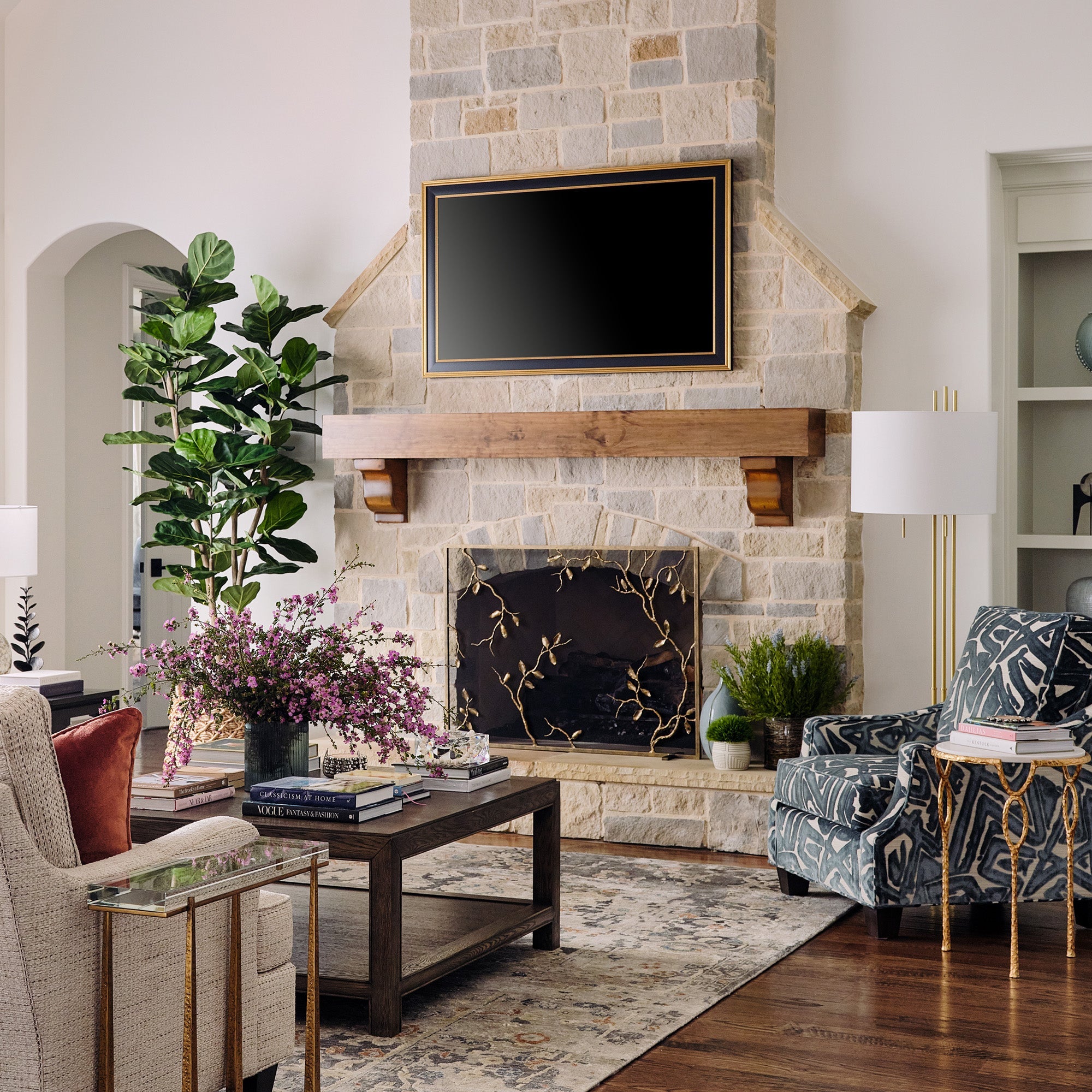
Ordering a custom fireplace screen goes best when the first conversation is specific. The studio needs to understand the room, firebox, and how the fireplace is used before recommending size, material, finish, or a route forward.

For designers, that inquiry often arrives while drawings are in progress, an installation date is set, or a client decision is pending. The most useful starting information is design direction, measurements, fireplace type, site conditions, and schedule.
Start With Design Direction
First decide what the screen needs to do in the room. Some projects call for the movement of Primrose Garden or Butterfly. Others need a quieter frame that finishes the firebox and allows the mantel, stone, art, or surrounding architecture to lead.
Send a straight-on photograph when the direction is not resolved. The fireplace, surrounding materials, and furniture plan often indicate whether the project needs more movement or more restraint.
Measure the Firebox Opening
Record the firebox width from side to side and the height from the hearth to the top of the opening. Label both dimensions clearly and check them before sending. Transposing width and height changes the proportion of the entire screen.
Width: horizontal firebox opening, side to side.
Height: vertical firebox opening, hearth to the top.

Record the Site Conditions
Note a raised firebox, uneven stone, shallow depth, existing flashing, a hearth lip, or a change in elevation between the hearth and surround. These conditions affect the frame, feet, depth, and finished size.
A photograph provides context that measurements alone may miss. Include the complete fireplace elevation rather than only a close view of the opening.
Identify Gas Log or Wood Burning
Fireplace type affects the material and finish conversation. Wood-burning fireplaces produce more heat, and unusually large, frequently used, or exterior fireplaces may require different recommendations from a typical indoor gas-log installation.
Tell the studio how the fireplace is used before the quote is prepared, particularly when glass or a hand-applied finish is being considered.
What to Send With the First Inquiry
- A straight-on photograph of the complete fireplace
- Clearly labeled firebox width and height
- Any raised lips, irregular stone, flashing, or depth constraints
- Whether the fireplace is gas log or wood burning
- Design and finish direction, if known
- The project schedule and required delivery date

When the Schedule Is Tight
Custom fireplace screens typically require 10 to 12 weeks from approval. If the room needs a screen sooner, include the installation date in the first message so the studio can also evaluate current in-stock options.
An in-stock screen may resolve the project when its size, form, and finish suit the fireplace. A custom commission remains the better route when the opening or room requires a specific proportion.
What Happens Next
Once the studio has the photograph, measurements, fireplace type, design direction, and timing, the team can recommend an in-stock piece, custom sizing, or a fully custom commission. Drawings and finish decisions follow the agreed scope.


