

Bringing nature into a room is less about adding plants than deciding how natural materials, light, and organic form will relate to the architecture. The strongest interiors use those elements as part of the composition, not as decoration applied at the end.
Begin with what is already present: a garden view, the grain of the floor, stone at the hearth, or the way daylight moves across a wall. From there, wood, linen, wool, plaster, forged iron, and hand-applied finishes can build a material language that feels connected to the setting.
Begin With the View and the Architecture
Windows establish the room's clearest relationship to the outdoors. Before adding pattern or botanical references, study the sightlines from the main places where the room will be used. Keep furniture below an important window, leave space around a garden door, and avoid placing a tall object where it interrupts a long exterior view.
The architecture may already carry natural material: limestone, oak, brick, terracotta, or plaster. Treat those surfaces as the beginning of the palette. A room needs fewer added gestures when its permanent materials are allowed to lead.
Build a Material Palette
Natural materials bring variation that manufactured surfaces often remove. Veining changes across stone. Linen slubs catch the light. Forged iron holds small marks from forming and finishing. Those differences give the eye something to return to without relying on a busy pattern.
Choose a short group of materials and repeat them at different scales. Oak might appear in the floor and again in a small table. A hand-applied metal finish can connect a fireplace screen to lighting or cabinet hardware. Wool, linen, and plaster can soften harder surfaces without making the room feel rustic.

Use Botanical Form With Restraint
Leaves, branches, flowers, and insects can introduce movement, but they do not need to appear everywhere. One strong botanical form often carries more presence than several smaller references competing across textiles, art, and objects.
Consider the outline as much as the subject. A branching chandelier can extend into open space. Metal leaves can create depth against fine mesh. A loose arrangement of butterflies can follow the rise of a stair. The surrounding negative space is part of each composition.
If a room already has a garden view or a patterned wallcovering, use fewer literal botanical forms elsewhere. Material and silhouette can continue the connection without repeating the motif.

Work With Natural Light
Light changes every material in the room. Aged metal, honed stone, polished glass, and open-grain wood each respond differently over the course of the day. Place reflective surfaces where they can extend daylight, but keep their scale and angle in service of the room rather than the reflection alone.
At night, build several lower sources instead of relying on one ceiling fixture. Sconces, table lamps, and firelight create smaller areas of illumination and allow textured surfaces to remain visible after daylight has left the room.
Place Greenery as Part of the Composition
Plants work best when their scale answers the room. A tall tree can fill an empty corner beneath a high ceiling. A low arrangement may sit beneath a sightline without blocking it. Smaller plants are most effective when grouped deliberately rather than scattered across every surface.
Choose vessels with the same care as furniture and lighting. Terracotta, aged metal, stone, or a quiet ceramic finish can connect the planting to the larger material palette. The vessel should belong to the room even when the plant is changed.
Let the Hearth Carry Organic Form
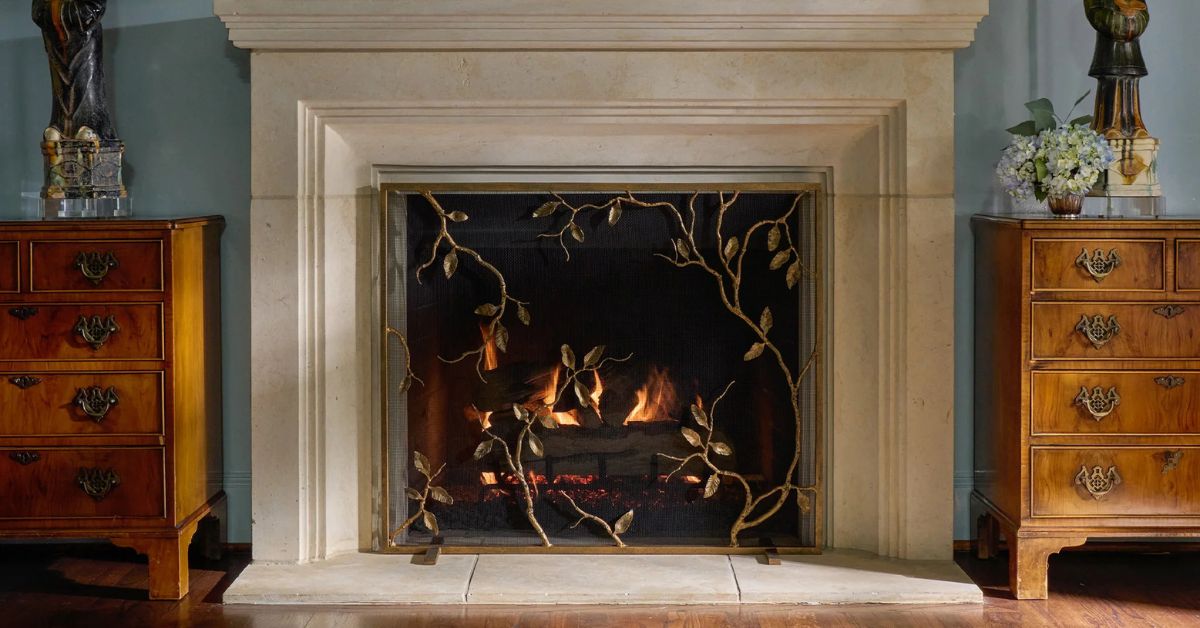
The fireplace is a natural place to introduce botanical metalwork because the screen has a clear architectural role. A design based on branches or leaves can add movement while the frame remains scaled to the opening and aligned with the surround.
Look at the relationship between the metal finish and the existing stone, tile, millwork, and nearby hardware. An aged gold surface will read differently against pale limestone than against red brick. Blackened iron can hold its own beside darker stone or connect to window frames and lighting elsewhere in the room.
Repeat, Then Edit
A natural interior does not require every material or motif at once. Repeat a few forms, colors, or finishes so the room has continuity, then remove anything that only restates an idea already present.
Seasonal branches, flowers, and greenery can change. The architecture and principal materials should remain strong without them. When the permanent composition is resolved, those temporary elements feel like part of the room rather than the source of its character.
Nature, Interpreted for the Room
The connection to nature may come through a direct view, a piece of hand-formed metalwork, or the quiet variation within wood and stone. What matters is that each choice relates to the scale, light, and materials already present. The result feels specific to the room because it began there.


